
Impact on Local Residents
In recent days, a serious industrial incident emerged in Southern California. A large chemical storage tank at an aerospace manufacturing facility in Garden Grove was reported as unstable, forcing the evacuation of approximately 40,000 residents.
Authorities have stated that the tank, which contains methyl methacrylate, a flammable and volatile substance used in plastics manufacturing, faces the risk of rupturing and releasing thousands of gallons of hazardous material or undergoing a thermal runaway reaction that can lead to an explosion.
Despite active cooling operations, internal temperatures have reportedly kept increasing, underscoring the complexity of managing such a scenario once it has entered a critical stage.
At the time of writing, emergency teams are working around the clock to stabilize the situation and prevent escalation.
A Familiar Pattern in High-Risk Industries
While every incident has its own unique circumstances, the main challenges are familiar.
Across industries such as oil and gas, petrochemical, aerospace, and power generation, critical assets like storage tanks, pressure vessels, and pipelines operate continuously under stress. Exposure to temperature fluctuations, pressure cycles, corrosion, and chemical reactions introduces progressive degradation over time.
When degradation goes undetected, or its severity is underestimated, the consequences can escalate rapidly, leading to:
- Loss of containment
- Environmental impact
- Asset damage or domino effects on adjacent infrastructure
- Financial impact: Property loss, fines and penalties, environmental cleanup costs
- Risk to human safety: injuries and fatalities, long-term health effects
History provides multiple reminders of this reality. Investigations into past industrial failures have consistently highlighted undetected defects, insufficient inspection resolution, or delayed intervention as contributing factors.
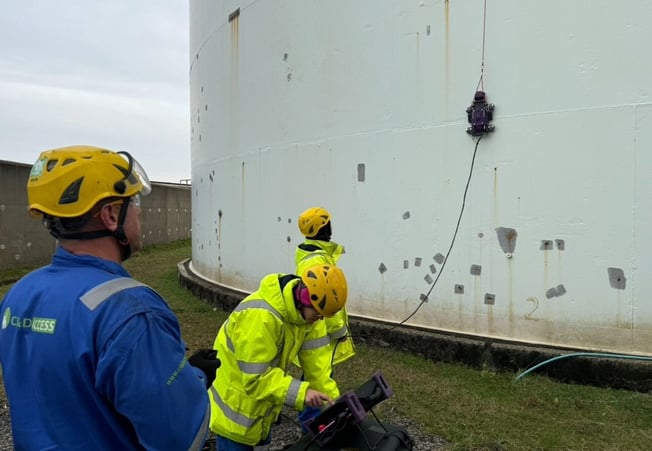
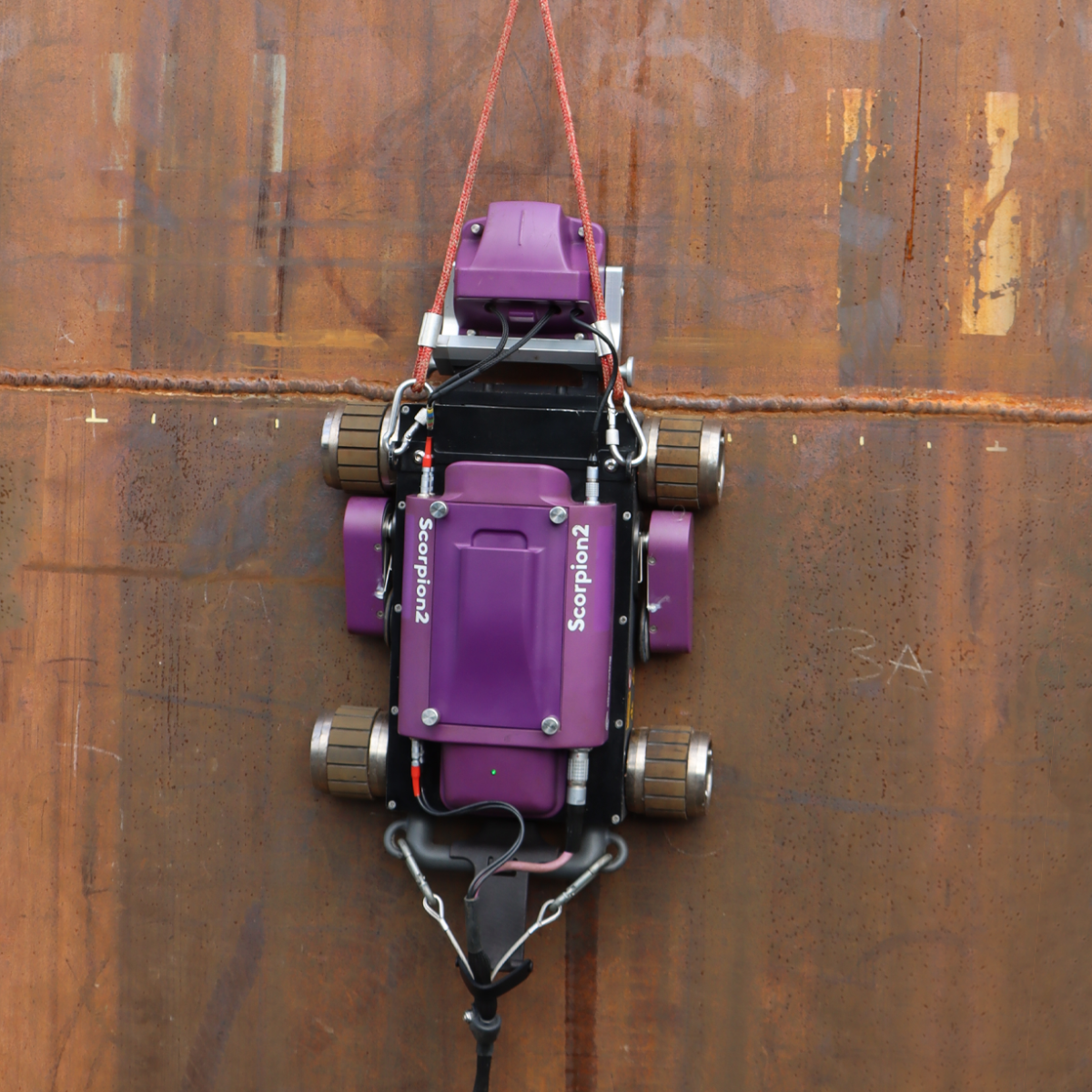
Tank inspection using Scorpion2.
The Challenge: You Cannot Fix What You Cannot See
One of the most critical challenges in asset integrity management is limited visibility.
In the California case, responders initially relied on external temperature readings from drones, which later proved insufficient to understand the true internal condition of the tank.
This points to a common issue: External assessments alone rarely offer a full understanding of what is happening inside an asset.
-
Beneath coatings and linings
-
Inside welds
-
Internal surfaces
-
Inaccessible interfaces
Without the right inspection techniques, these failure mechanisms can remain hidden until they reach a critical stage.
When Failure Becomes Part of the Containment Mechanism
In complex situations like the one currently developing, asset behavior is rarely binary.
Early updates suggest that the development of a crack in the tank may be contributing to pressure relief, potentially reducing the likelihood of a catastrophic explosion.
While this may appear as a positive development, it introduces a different type of risk profile. A controlled or semi-controlled release can reduce peak pressure, but it also raises new challenges related to leak management, environmental exposure, and the integrity of surrounding assets.
This is an important reminder that, in high-risk systems, failure does not occur as a single event. It evolves through stages, each requiring a different level of understanding, monitoring, and response.
From an inspection standpoint, this reinforces the need not only to detect defects, but to characterize their behaviour in real time and understand how they influence the overall system dynamics.
How Critical Assets are Typically Assessed
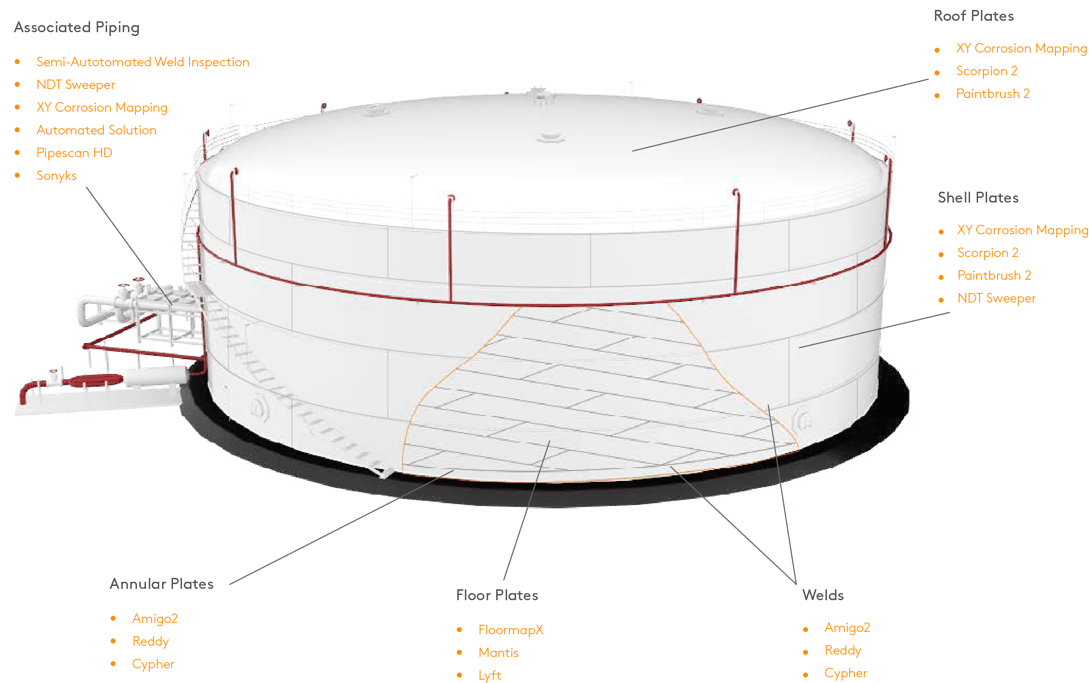
To evaluate the integrity of storage tanks and pressure vessels, industries rely on a combination of non-destructive testing (NDT) methods designed to detect defects without interrupting operations or damaging the asset.
Some of the most widely used techniques include:
Ultrasonic Testing (UT): Ultrasonic methods use high-frequency sound waves to measure wall thickness and detect internal flaws such as corrosion-related wall loss, erosion, laminations or cracking. These techniques are essential for identifying loss of material that cannot be seen visually on the surface.
Electromagnetic Techniques (ET): Electromagnetic inspection methods, including eddy current and magnetic flux leakage (MFL), are used to detect surface and near-surface defects. Eddy current methods are particularly useful in conductive materials, and MFL is specifically performed on ferromagnetic materials and is especially effective for detecting metal loss. These technologies are highly effective for corrosion detection and screening large areas efficiently.
Remote Visual Inspection (RVI): Visual inspection remains fundamental, but it has evolved significantly with the use of robotics, drones, and other remote systems. These tools allow access to confined, hazardous, or otherwise inaccessible areas while minimizing personnel exposure to risk.
Integrated inspection strategies: In practice, no single method is sufficient on its own. The most effective integrity management programs combine multiple techniques to provide a more comprehensive and reliable assessment of asset condition.
From Periodic Inspection to Continuous Awareness
Another important development in recent years has been the move from periodic inspection to continuous or data-driven monitoring.
Traditional inspection intervals, often defined by regulatory frameworks, may not capture rapidly evolving conditions such as:
-
Thermal runaway scenarios
-
Accelerated corrosion under insulation
-
Unexpected process deviations
Emerging approaches increasingly rely on:
-
Permanently installed sensors
-
Robotics and automation in-service inspection
-
Advanced data analytics
These strategies aim to detect changes earlier, reduce uncertainty, and support more informed decision-making before a situation escalates to a critical state.
|
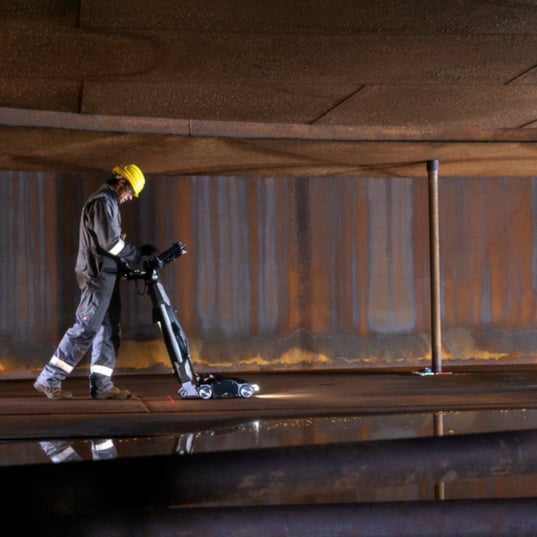
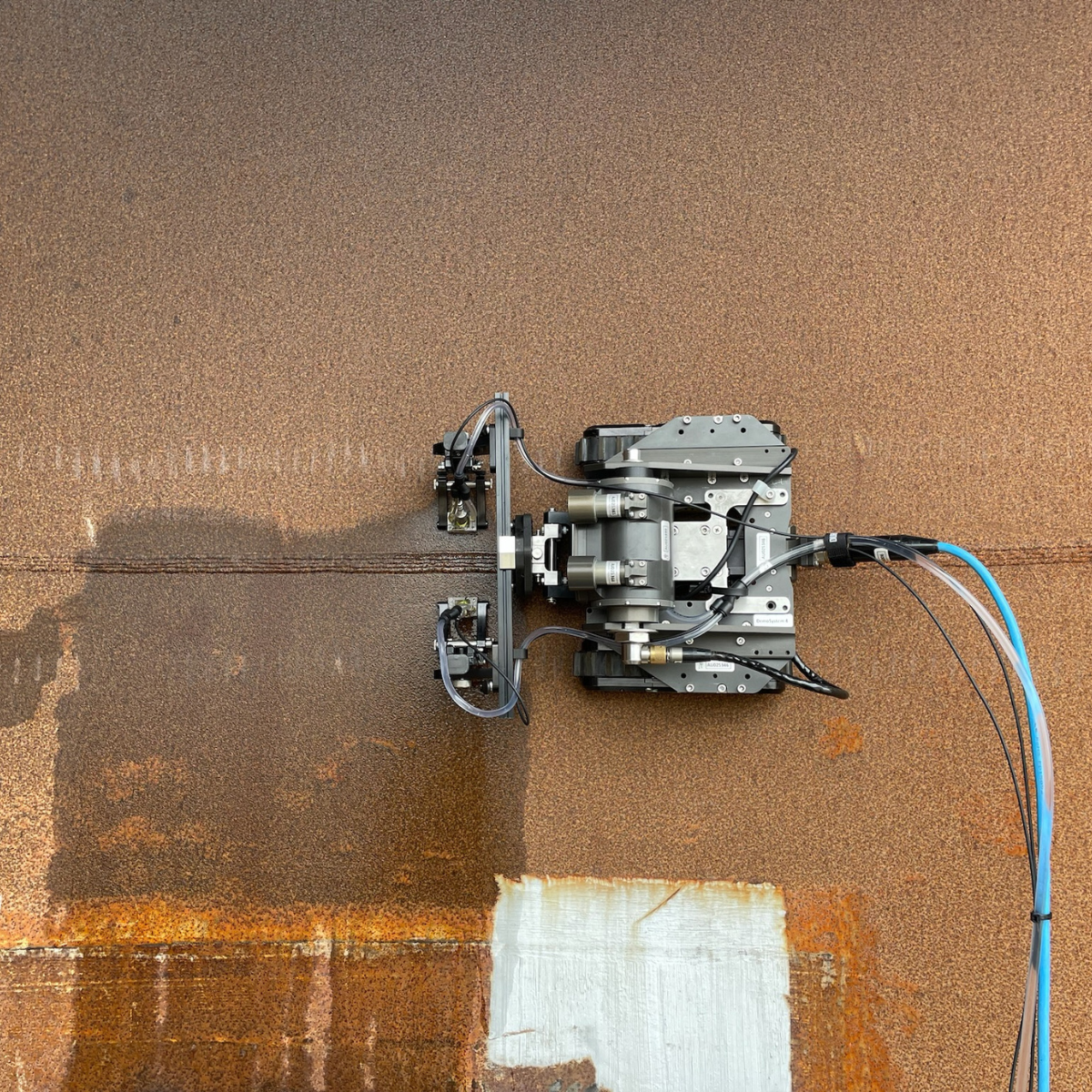
NDT series based on a magnetic platform featuring UT probes. |
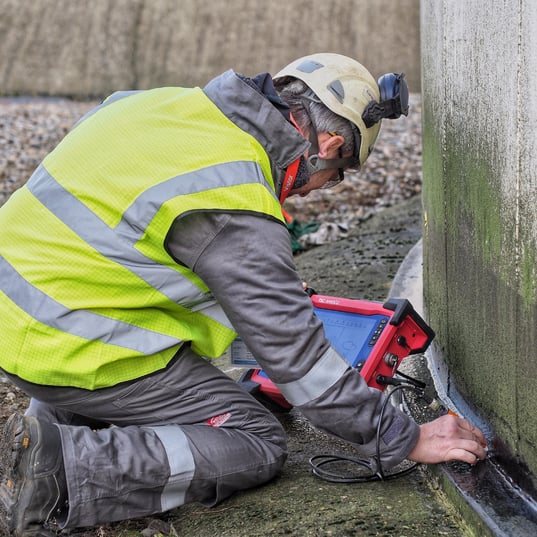
Tank inspection using Scorpion2. |
A Moment for Reflection, Not Speculation
It is important to recognize that the situation in California is ongoing, and the priority remains the safety of first responders, workers, and local communities.
At moments like this, the role of the NDT and inspection community is not to speculate on causes, but to reinforce a fundamental principle:
The integrity of critical assets depends on our ability to assess them accurately, early, and continuously.
Moving Forward
Industrial assets will continue to operate under demanding conditions. The key challenge is not whether degradation will occur, but how effectively it can be detected, characterized, and managed before it compromises integrity, availability, or safety.
Advances in inspection technologies are enabling better answers to that challenge:
-
Higher-resolution inspection data
-
Improved probability of detection (PoD)
-
Safer inspection methods
-
Improved access to complex geometries
-
Faster decision cycles
-
Greater repeatability and consistency in data collection
-
Improved data traceability and digital documentation
These capabilities are not just technical improvements. They are part of a broader commitment to:
-
Protect people
-
Preserve the environment
-
Ensure operational continuity
Final Thoughts
When a critical asset enters a point of instability, the available response options narrow rapidly, and risk levels increase significantly.
The real opportunity lies earlier, in understanding asset condition before it becomes a crisis.